India's National Policy for Farmers 2007 defines farmer as:
For the purpose of this Policy, the term FARMER will refer to a person actively engaged in the economic and/or livelihood activity of growing crops and producing other primary agricultural commodities and will include all agricultural operational holders, cultivators, agricultural labourers, sharecroppers, tenants, poultry and livestock rearers, fishers, beekeepers, gardeners, pastoralists, non-corporate planters and planting labourers, as well as persons engaged in various farmingrelated occupations such as sericulture, vermiculture, and agro-forestry. The term will also include tribal families / persons engaged in shifting cultivation and in the collection, use and sale of timber and non-timber forest produce.
As per the 2014 FAO world agriculture statistics India is the world's largest producer of many fresh fruits like banana, mango, guava, papaya, lemon and vegetables like chickpea, okra and milk, major spices like chili pepper, ginger, fibrous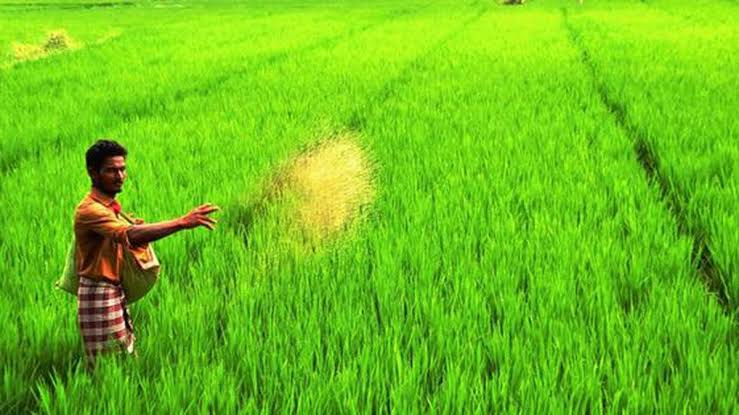 crops such as jute, staples such as millets and castor oil seed. India is the second largest producer of wheat and rice, the world's major food staples.
India is currently the world's second largest producer of several dry fruits, agriculture-based textile raw materials, roots and tuber crops, pulses, farmed fish, eggs, coconut, sugarcane and numerous vegetables. India is ranked under the world's five largest producers of over 80% of agricultural produce items, including many cash crops such as coffee and cotton, in 2010. India is one of the world's five largest producers of livestock and poultry meat, with one of the fastest growth rates, as of 2011.
crops such as jute, staples such as millets and castor oil seed. India is the second largest producer of wheat and rice, the world's major food staples.
India is currently the world's second largest producer of several dry fruits, agriculture-based textile raw materials, roots and tuber crops, pulses, farmed fish, eggs, coconut, sugarcane and numerous vegetables. India is ranked under the world's five largest producers of over 80% of agricultural produce items, including many cash crops such as coffee and cotton, in 2010. India is one of the world's five largest producers of livestock and poultry meat, with one of the fastest growth rates, as of 2011.